Chapter 23 · The Real Constitution
The Structure of the Government
Application of the Macrocosm-Microcosm Principle
The macrocosm-microcosm principle posits that the universe (macrocosm) and its smaller components, such as individuals (microcosm), share a fundamental similarity in structure and harmony. This philosophical concept suggests that the balance, order, and principles governing the cosmos are mirrored in human beings, whose inner harmony reflects universal patterns. This idea can be extended to a nation which can be viewed as an artificial person. A nation is a collective entity with its own identity, consciousness, and purpose, akin to an individual. Just as a person’s well-being depends on internal balance, a nation’s stability relies on aligning its societal structure with the cosmic principles of order and harmony.
Discerning the exact principles of the macrocosm can be elusive. To address this, we can draw interpolations from philosophical traditions like Platonism and the Samkhya Sutras of Indian philosophy, which offer frameworks for achieving harmony.
Plato's highest good is declared to be the ultimate and abstract reality, the absolute mind. Conforming to logic, the self-identity of thought and the idea of good. For Plato, the highest good is to gain a vision of the Form of the Good (beatific vision), as described at the end of the allegory of the Cave. This can be understood either as a profound mystical vision of the Good or, perhaps also, on a daily level, as maintaining a frame of mind that intuits God’s ongoing commands and counsels. Plato's The Republic argued that "In the world of knowledge the idea of good appears last of all, and is seen...to be the universal author of all things beautiful and right", calling the process of unification with God ‘homoiosis’, or assimilation to God.
In Plato’s Republic, the ideal state is a reflection of the individual soul, which he divides into three parts: reason, spirit, and appetite. Reason governs through wisdom, spirit drives courage and honour, and appetite manages desires and material needs. Harmony in the soul arises when each part fulfils its role without overstepping—reason leading, spirit supporting, and appetite sustaining. For a nation regarded as an artificial person, Platonism suggests a configuration where distinct roles are assigned to different societal components. The government acts as the reasoning faculty, crafting policies and guiding the nation; the military and law enforcement serve as the spirited auxiliaries, ensuring security; and the economic sectors function as producers, supporting material welfare. By maintaining this balance, where no single element dominates, the nation reflects the harmony of the macrocosm, aligning its artificial "personality" with cosmic order.
Samkhya Sutras
The Samkhya Sutras, a cornerstone of Indian philosophy, mention that Jagat (the Cosmos) is an interplay of Purusha (consciousness) and Prakriti (matter). Purusha is the eternal, unchanging awareness, while Prakriti is the dynamic material force shaping the physical world. The universe and individuals arise from their interaction. Here, Purusha (Consciousness) is the constitution along with all its knowledge, and Prakriti is the nation along with all its people and natural resources.
If a nation mirrors the macrocosm, it must harmonise its spiritual and material dimensions. An overemphasis on Prakriti, economic growth, infrastructure, or material progress without nurturing Purusha, the knowledge and skill development of its citizens, leads to imbalance. A nation configured on Samkhya principles would thus prioritise both fostering education, culture, and ethical growth alongside material prosperity. This dual focus ensures that the nation, as an artificial person, reflects the cosmic interplay of consciousness and matter, sustaining harmony within its collective identity.
Macrocosm’s Principles
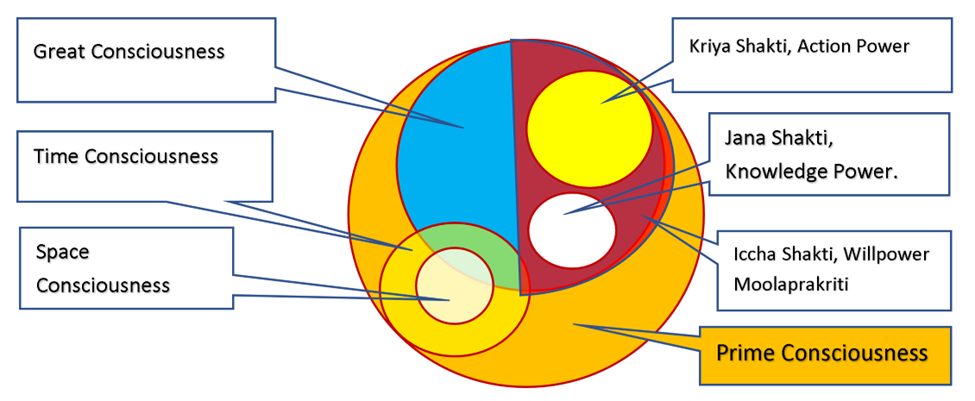
While space, time and energy make up the other four dimensions, intelligence and consciousness are altogether different realms. Consciousness is the attribute of the 'interpreter'. The Cosmos is primarily made of only two distinct parts: one is the interpreter, and the other is interpreted. Entire nature consisting of matter, including stars, galaxies and also our human body, falls in the category of 'interpreted'. The interpreter can understand, analyse, differentiate, influence and control nature. Nature is subject, and thus here comes a new definition to the word 'Life'- is that one which has the potential to sense and interpret, or otherwise it is not alive. The interpreter is also known as Purusha in Sanskrit, and Nature is known as 'Prakriti'; therefore, the entire construct is an interplay of the two, ‘ Purusha' and 'Prakriti'.
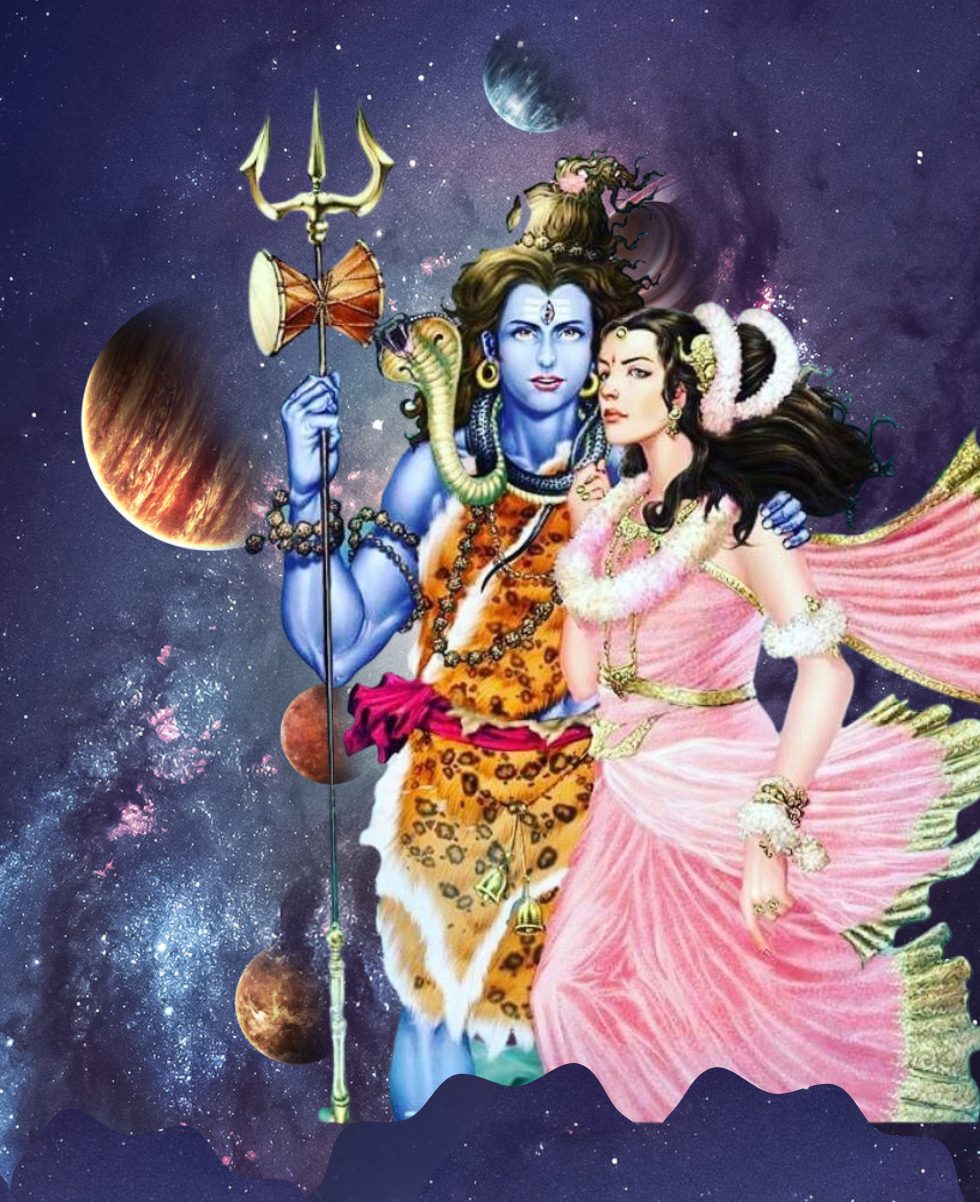
The consciousness (Purusha) at the origin and commenced the cosmos with sustained thought which led to the origin of Energy (Prakriti). The creation and destruction of the universe is a function of Shiva who creates the primal base vibration Shakti. Shiva represents a major part of Parmeshwar and he is known as Maheshvara. He is also depicted as half Shakti (power of thought, tamas) and Half Shiva (Consciousness).
When Prakriti rises from Shiva, her evolution is facilitated by Vishnu’s time (sequencing) and Brahma (Space). There is one Mahabrahma who controls the Brahman (the format) of space (Akasa) and has many forms in other galaxies as the Brahma of each Galaxy. All galaxies also move around the centre of the Cosmos, which is the Shiva Linga (mark of Shiva where primal vibration gets generated). Brahma is consciousness that empowers Space. There is one Brahma in each Galaxy. Brahma has evolved from Vishnu (Time), which indicates a space-time relationship. The galaxies compress and recreate in big bangs. The matter is controlled by sentient beings, Brahma (Point of Expanse). Brahma creates in his galaxy as per his thought process. Therefore, Panch Mahabhutas (consciousness, Energy, Time, Space, Matter) form the Prakriti, which is a Kriti by Pra (outside these dimensions, Kaivalya). The interplay of Purusha and Prakriti is represented by Shiva and Shakti.
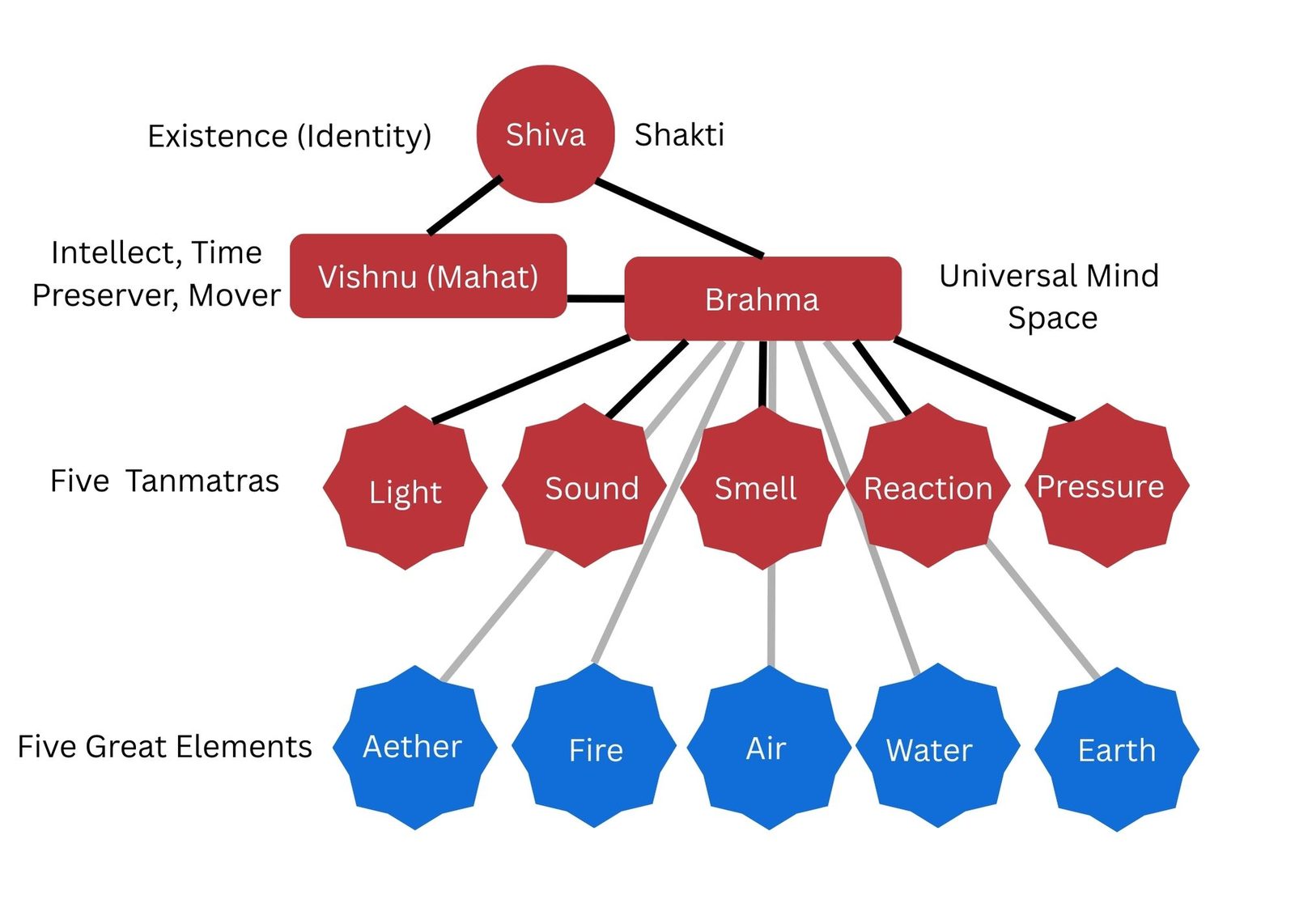
From Prakrti evolves Mahat- the principle of mass, from that, proceeds the I-Principle, and from that, proceeds sixteen, from which five out of this set of sixteen existences. The five Tanmatras are the five primary elements that convey the information of the senses to the mind. These form the unique connection of the human senses to the five gross elements of the cosmos because the Tanmatras are the common essence of both.
The formation of matter (heavier from lighter) is according to Mahat (the principle of mass and also the intellect of the cosmos). Mahat springs from the Pradhâna (Prakriti) and, in its turn, gives rise to Ahamkâra (identity). Ahamkâra leads to the Tan-mâtras of Sound, Touch, Smell, Form, and Taste; and these, in turn, evolve the five gross elements.
Microcosm’s Principles
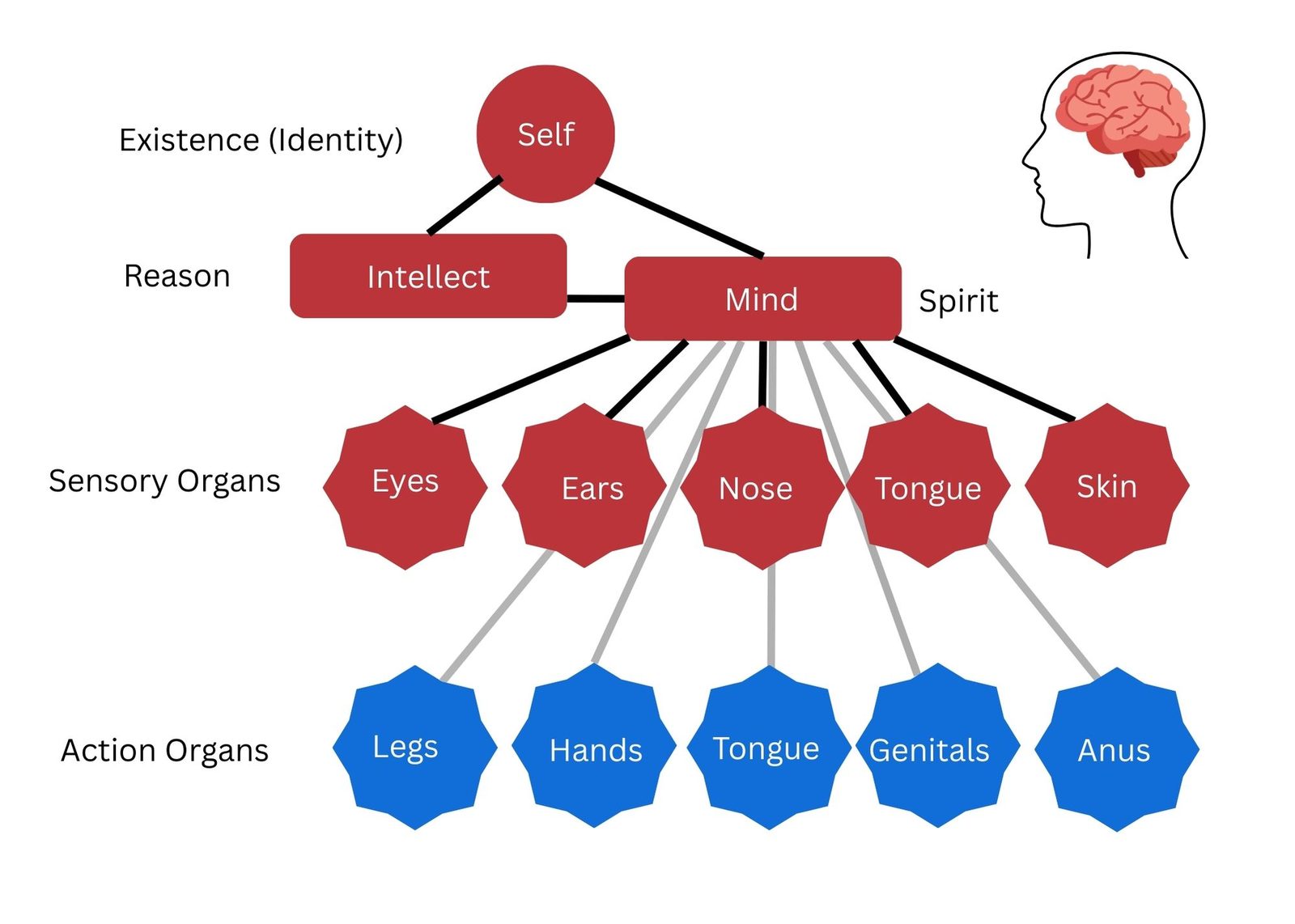
The Microcosm is the human body. The human body, including the brain, can be considered the hardware and cognition can be considered as software. The software has components such as Identity, Intellect and Mind, which mainly represent the central nervous system. These are connected to the peripheral nervous system, which is an information network of channels (Nadis) that conveys information sensed by sensors. A unique identity of having a sense of self (I) is Ahamkara (differentiator and decision maker), these are surrounded by Buddhi (intellect) and Manas (mind). The mind receives all sense inputs from sense and action organs and integrates them to make sense.
Interpolation between the Microcosm’s and Macrocosm’s Principles
A nation is confluence of thoughts, philosophy, wisdom and spirituality of its people. The government must draw parallels with the macrocosm because it represents the collective good and acts as a greater patriarch like the benevolent Macrocosmic organisation who creates the cosmos and takes care of everyone on the principles of merit and karma.
The government must also draw parallels from microcosmic principle as it represents its people. Both are same in essence, and therefore the nation’s structure is based on the following observations.
At the highest echelon of the Macrocosm are the Purusha and Prakriti. Purusha, the consciousness of a nation, is the philosophy, wisdom and knowledge of a nation. It is represented by the principles laid down in the constitution, while the principles of Dharma are eternal and unchanging, the body of knowledge is open-ended. The Prakriti is the people, land, flora, fauna and the natural resources. The highest echelon of governance represents its identity (Ahamkara) and existence. It deals with all issues related to the existence of the nation.
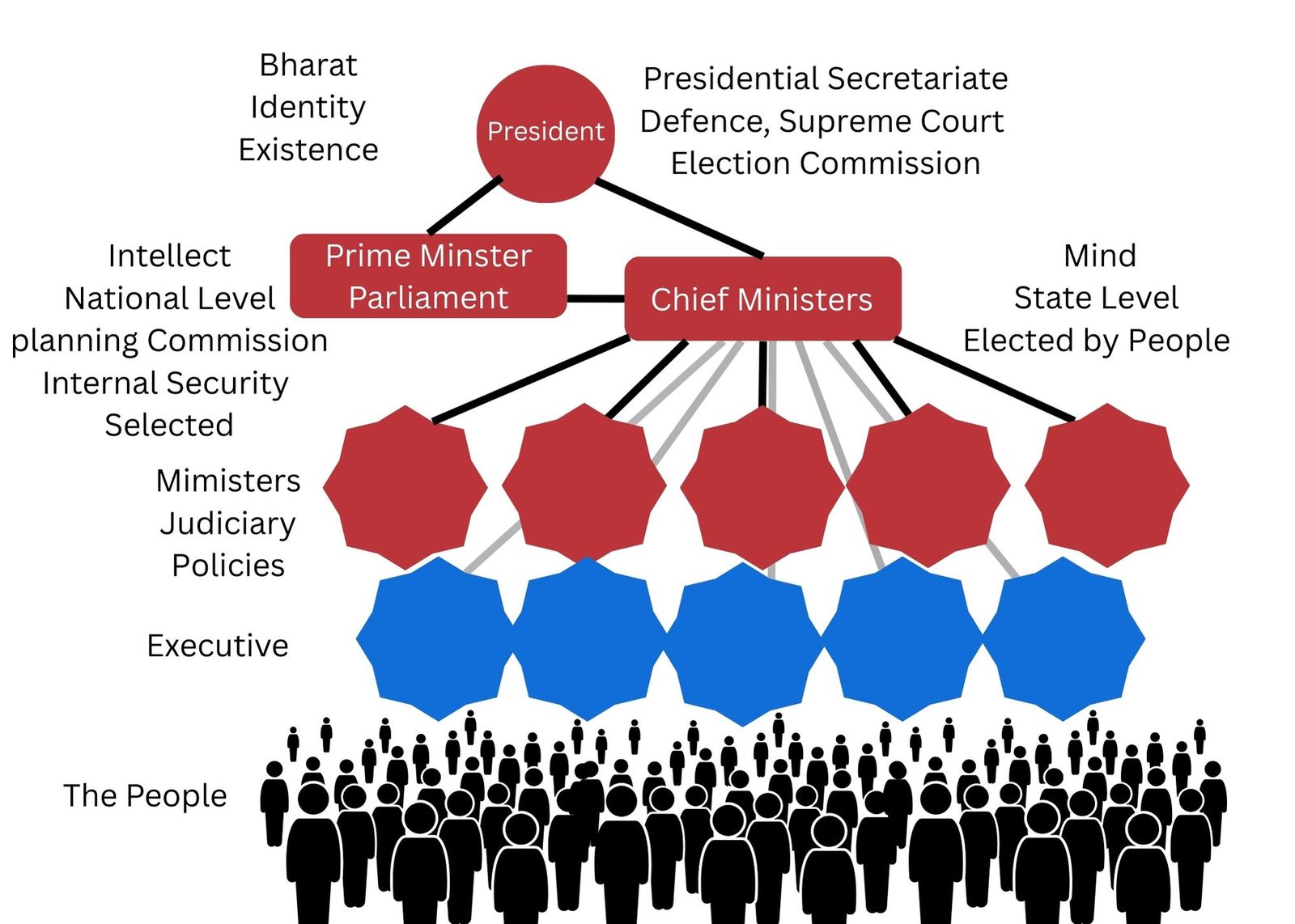
The second tier of governance consists of the national Parliament and control of the wise. The control here means flow and growth of the nation, and not authoritarian control. This stage represents the preserver or mover of the cosmos, represented by Theos (Vishnu), whose property is Mahat (intelligence). The wise people having high IQ, EQ, leadership capability, work experience and intention to serve the nation, rising above the narrow personal and regional interests, have to be selected and trained for the role in the national Parliament. The selection would be a continuous process as people may retire and also get promoted to the presidential secretariat.
The third tier of governance is the state assemblies. The state assemblies consist of elected representatives of the people. This part corresponds to the mind of the universe (Brahman), whereas each state is represented by the individual Brahma (Chief Minister). Since the Jeeva or individual soul is the same as Brahman, the assemblies consist of the people who realise their larger self and therefore the larger responsibility.
The actions of the nation are performed by the executive, who represents the hands. They are readily available to the state. All other organs are represented by various professions of people who complement each other in the national economic and socio-cultural setup and maintain harmony.
In the forthcoming chapters, various tiers of governance are explained. Though these resemble the existing system, they have subtle differences that help the governance align with the cosmic order.