Chapter 5 · Constitution of India
The Preamble
The preamble of the Indian Constitution outlines the main principles of the nation and the goals of its people. It is not legally enforceable, but a guiding document. The draft of the Preamble of the Indian Constitution is based on the 'Objectives Resolution', drafted and moved by Pt. Jawaharlal Nehru. In his words, the Objectives Resolution was “something more than a resolution. It is a declaration, a firm resolve, a pledge, an undertaking and for all of us a dedication”. It was adopted by the Constituent Assembly on January 22, 1947.
The preamble bears the intent of the Constitution. It means "prologue, preface, preliminary statement," from Late Latin praeambulus", walking before," from Latin prae "before" (see pre) + ambulare "to walk". Especially the introductory paragraph of a statute or resolution, stating the reason for and intent of what follows.
The preamble of a constitution is far more than a mere introduction—it acts as the foundational cornerstone that defines the essence of the entire document. It articulates the governance model, core values, and philosophical principles that shape the nation’s identity and aspirations. Because of its critical role, the preamble should be unchallengeable, meaning its authority must remain inviolable and its tenets sacrosanct. To allow any portion of the Constitution to contradict the preamble would introduce internal inconsistencies, weakening the legal and moral framework of the state.
For example, if the preamble enshrines ideals such as democracy, justice, or liberty, no subsequent clause should undermine these commitments. This coherence ensures that the constitution remains a unified expression of the nation’s founding vision.
The Original Preamble to the Constitution of India
The original preamble to the Constitution of India is as follows.
WE, THE PEOPLE OF INDIA, having solemnly resolved to constitute India into a SOVEREIGN DEMOCRATIC REPUBLIC and to secure to all its citizens:
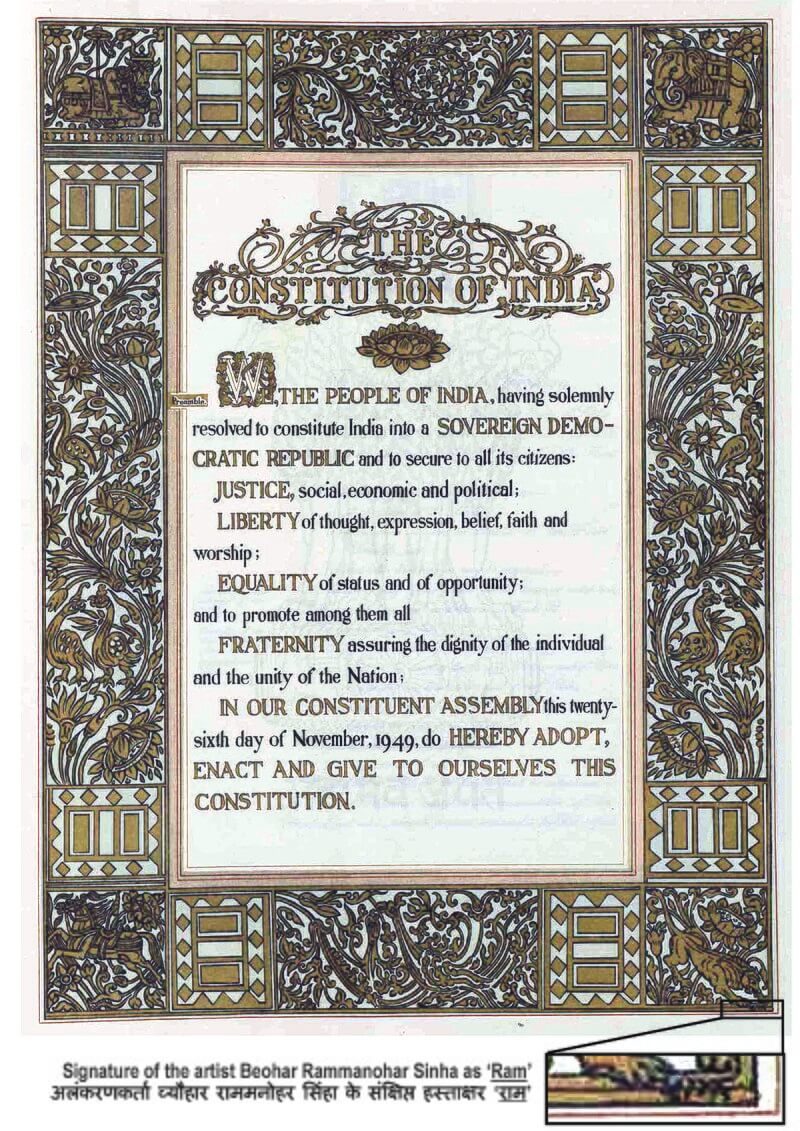
JUSTICE, social, economic and political;
LIBERTY of thought, expression, belief, faith and worship;
EQUALITY of status and of opportunity;
and to promote among them all
FRATERNITY assuring the dignity of the individual and the unity of the Nation;
IN OUR CONSTITUENT ASSEMBLY this twenty-sixth day of November, 1949, do HEREBY ADOPT, ENACT AND GIVE TO OURSELVES THIS CONSTITUTION.
Image Credits
The Constitution embraces the concept of popular sovereignty, asserting that the power of the state resides in the people. This principle is evident in the Preamble, which begins with "WE, THE PEOPLE OF INDIA". People of India never directly voted for the adopting the Preamble. The start could have rather been “WE, THE MEMBERS OF CONSTITUENT ASSEMBLY" because there was no referendum held to choose the system of governance.
The Preamble is the Bedrock of constitutional integrity. It sets the tone and purpose of the constitution, functioning like a mission statement that guides the interpretation and application of all other provisions. It serves as the ultimate reference point for the document’s legitimacy. Any deviation or contradiction within the constitution would erode its structural integrity, creating a fragmented system where competing principles vie for dominance. If the Preamble is required to be changed, it should be done through a general referendum and not just by a party in the majority. The Preamble was changed later on.
Amended Preamble
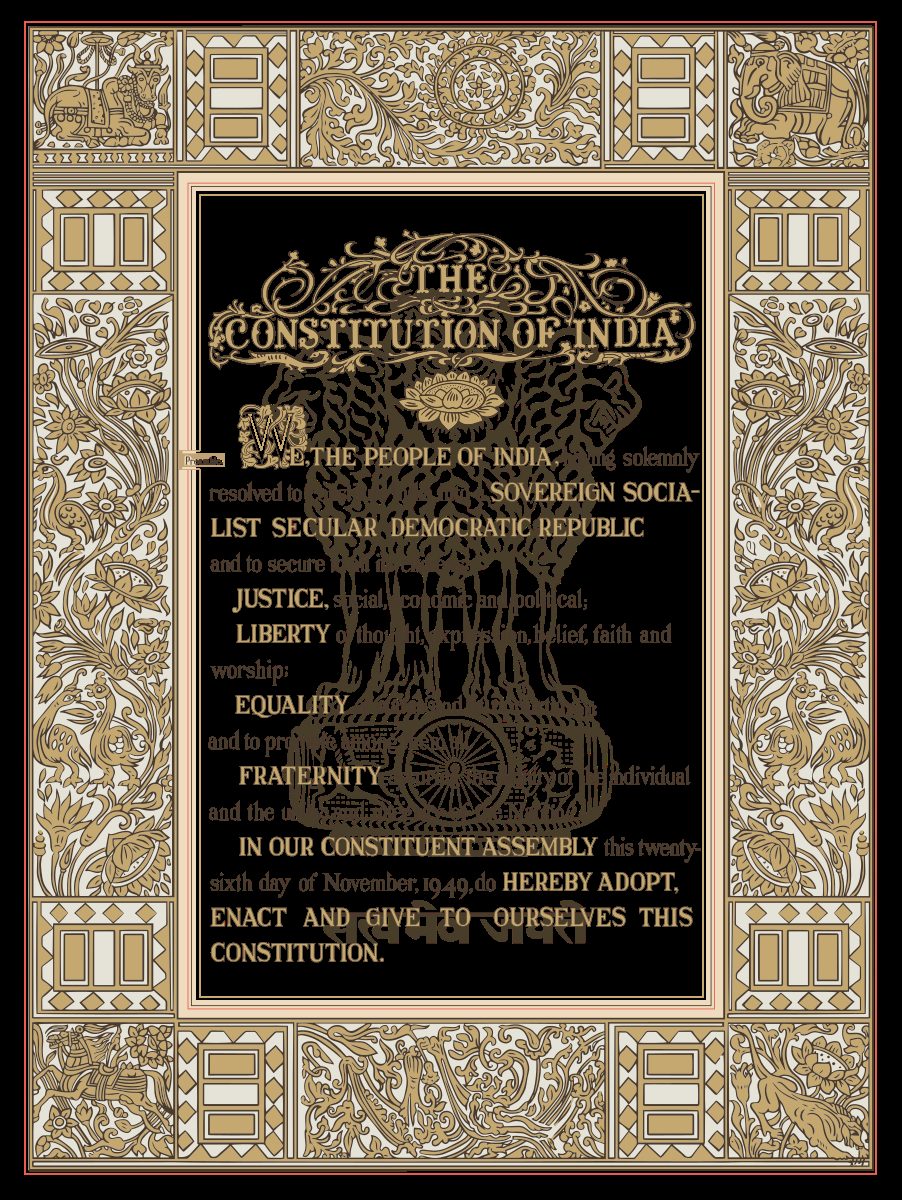
On 18 December 1976, during the Emergency in India, the then Prime Minister, Mrs. Indira Gandhi’s government pushed through several changes in the Forty-second Amendment of the Constitution of India.
The words "socialist" and "secular" were added to the Preamble and the phrase “unity of the Nation” was changed to “unity and integrity of the Nation”. This amendment aimed to emphasise the commitment of the Indian state to socialism and secularism as fundamental principles.
PART TWO
Criticism of European Ideas