Chapter 8 · Criticism of European Ideas
Partycracy
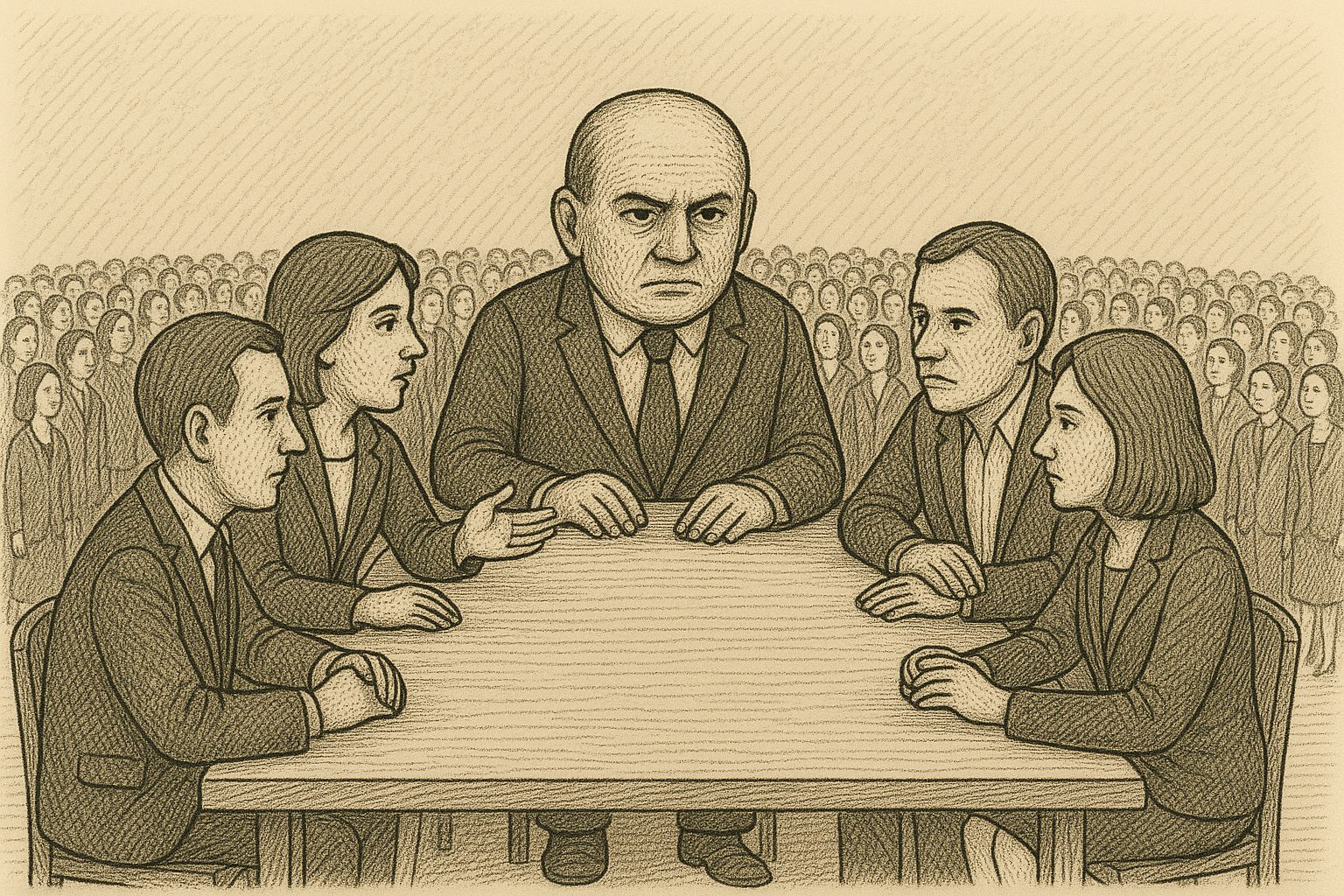
Use of the term ‘Democracy’ in the context of a modern political party-based system is quite inappropriate. The reason for this is that democracy is connected directly to people, and as the distance from people builds up, the democratic spirit also vanishes. Secondly, a party is akin to an artificial person who may seem a collective result of participating individuals but becomes a ‘Partycracy’ or artificial democracy.
A representation of Democracy and Partycracy
Thirdly, the ancient Gantantra system of India and the democracy of Greece considered the family as the base unit of society and not the individual, as is considered in the case of the modern setup.
The concept of democracy can be traced back to ancient Greece, particularly Athens, in the 5th century BCE. Ancient Greece is widely regarded as the birthplace of democratic governance. Athenian democracy was defined by direct participation, where citizens gathered in the ecclesia (assembly) to vote on laws, policies, and critical decisions such as war and peace.
Its key features included:
Direct Democracy: Citizens voted directly on issues without intermediaries, ensuring immediate input into governance. Though it is often publicised that only male members voted, this understanding is not correct. It is logical to assume that a representative from a family participated in the process.
Franchise: Participation was restricted to free male citizens over the age of 20, excluding women, slaves, and foreigners. Every family was represented through its representative, and there was no party system.
Sortition and Rotation: Many public offices were filled by lot rather than election, and terms were short, reducing the risk of entrenched power and encouraging broad participation.
Small Scale: With approximately 30,000 eligible citizens, the small size of Athens facilitated face-to-face deliberation and civic engagement.
This system fostered accountability and a strong sense of ownership among citizens, as they were directly responsible for decisions. However, its exclusivity and reliance on a small, homogeneous population made it impractical for larger, more diverse societies.
The Romans (509-27 BCE) scaled up the idea of democracy and introduced a form of representative democracy. The Roman system included elected officials such as senators and consuls who represented the interests of the citizens.
The Magna Carta of 1215 in England marked a significant step towards constitutional governance by limiting the powers of the king and establishing certain legal rights for subjects. The Renaissance and Enlightenment periods furthered democratic ideals through the works of philosophers like John Locke and Montesquieu, who advocated for individual rights and the separation of powers.
The idea of a party system in politics can be found in the conflicts between Royalists and Parliamentarians during the English Civil War in the 17th century. The Royalists supported King Charles I and the monarchy, while the Parliamentarians, often associated with Puritans and other Protestant groups, opposed the king's absolute rule and sought more power for Parliament. This division laid the groundwork for the development of political factions and, eventually, formal political parties. Over time, these factions evolved into more structured political parties with distinct ideologies and platforms.
Edmund Burke is considered one of the first to articulate the importance of political parties, Burke argued that parties were essential for representing different interests and opinions within a society. He believed that parties could provide a structured way for political debate and decision-making.
James Madison, in the Federalist Papers, particularly Federalist No. 10, Madison discussed the dangers of factions but also acknowledged that a well-constructed union would be able to control their effects. He saw political parties as a necessary evil to ensure a diversity of opinions and prevent any single group from dominating.
John Stuart Mill supported the idea of political parties as a means to represent different viewpoints and promote political participation. He believed that parties could help educate the public and foster a more informed electorate.
The 18th and 19th centuries witnessed the emergence of modern democracies. The American Revolution (1775-1783) and the subsequent adoption of the U.S. Constitution in 1787 established a federal republic with a system of checks and balances. Similarly, the French Revolution (1789-1799) promoted the principles of liberty, equality, and fraternity, leading to the establishment of a republic.
The Reform Acts in Britain (1832, 1867, 1884) gradually extended voting rights to more citizens. The 20th century witnessed the global spread of democracy, with many countries adopting democratic systems after decolonisation and the end of World War II.
Critics argue that democratic processes can be slow and inefficient, leading to delays in decision-making and implementation. Democracy can be susceptible to populism and demagoguery, where leaders exploit popular sentiments for personal gain.
Democratic Setup in Modern India
India’s democracy, established with its independence in 1947, operates as a representative democracy characterised by universal adult franchise and a multi-party system. Its defining features include the following.
Representative Governance: Citizens elect representatives to the Lok Sabha (lower house of Parliament) and state assemblies, who legislate and govern on their behalf. Representative democracy is essential given India’s scale, but it creates a gap between citizens and decision-makers. Elected officials may prioritise party agendas or personal interests over constituents’ needs, leading to voter disillusionment.
Universal Franchise: All citizens above 18, irrespective of gender, caste, religion, or socioeconomic status, have the right to vote. However, it does not value citizens’ contribution and virtues. A highly valued scientist, thinker and contributor is also equal to a criminal, beggar and a traitor.
The focus on individuals diminishes the family’s importance. In many traditional societies, the family head—typically the eldest male—acted as the decision-maker, including in political matters. This structure positioned the family as a cohesive unit within the "pyramid of representation," where the head’s authority extended to voting on behalf of the household. By granting each family member a vote, Universal Franchise decentralises this authority, potentially reducing the family head’s influence and the family’s unified role in state affairs.
The family rests on its status as a stable mainstay of society. Human beings rarely live in isolation; families provide structure, support, and socialisation. In traditional models—like Raj Dharma in ancient India—the family head was akin to a patriarch or moral guide, responsible for the household’s welfare and decisions. Extending this to governance, a family-centric system might allow the head to cast a single vote representing the family’s collective stance. Proponents suggest this could strengthen family cohesion and enhance law and order, as the family head could enforce discipline, particularly among younger members, reducing societal indiscipline.
A centralised family vote could streamline representation, aligning political choices with the family’s values. It might also reinforce the family head’s authority, encouraging discipline and responsibility within the household. For instance, if young members know their political voice is mediated through the head, they might be more inclined to respect familial norms, potentially contributing to social stability.
No Basic Qualifications: Socrates, the first critic of Democracy, mentioned, "Foolish leaders of Democracy, which is a charming form of government, full of variety and disorder, and dispensing a sort of equality to equals and unequalled alike." He believed that not everyone has the right to vote. He saw voting as a skill acquired by wisdom.
Elected leaders are required to take part in legislation and not just represent people. If they do not have a working knowledge of history, geography, public administration, constitution, economics, sociology, political science, languages, debate, basic knowledge of science, mathematics and relevant work experience, how can they discharge their function effectively? The appointment of independent directors to a company board has more qualification requirements and accountability standards than the elected representatives who are directors of the entire country. Elected representatives do not understand the principle of separation of powers and increasingly take part in the execution. They also do not understand the principles of democracy and continuously enhance their benefits, perks and privileges.
In India, political parties often operate as closed systems, where advancement depends more on loyalty, caste, religion, regional affiliations, or personal connections than on competence or vision. This structure sidelines talented individuals who don’t align with these identity-based moulds or lack the political manoeuvring skills to rise within party ranks. Many well-qualified bureaucrats, legal professionals, military generals, diplomats, scientists, professors and researchers retire silently without directly contributing their wisdom and experience in the higher echelons of the government. The capable people, many of those with the intellect and wisdom to govern effectively, are left out. This is a profound waste of human potential in a country that needs innovative solutions to its complex challenges. India’s governance system, by sidelining qualified individuals, cheats the nation of the leadership it deserves.
Multi-Party System: There was no party system in the ancient concept. India’s political landscape features numerous parties, reflecting its linguistic, cultural, and regional diversity. The complexity of India’s federal system and coalition politics often results in delays and policy paralysis. Balancing diverse interests across regions and parties can impede swift, decisive action, particularly during crises.
While multi-party systems are often praised for their inclusivity and ability to represent a wide range of political views, they can also have significant disadvantages, particularly when they create or deepen social divisions. It seems likely that one of the most notable drawbacks is the tendency for parties to form along ethnic, religious, or tribal lines, especially in regions with deep-seated identity-based differences. The evidence leans toward multi-party systems reinforcing existing social divisions rather than fostering national cohesion, especially in contexts with deep identity-based politics.
The formation of parties based on identity can turn electoral competition into a zero-sum game, where one group's gain is perceived as another's loss. This can heighten inter-group tensions and lead to policies that prioritise specific communities over the broader national interest. For instance, in India, the rise of regional parties has sometimes led to policies that cater to specific linguistic or cultural groups, potentially marginalising others.
Moreover, multi-party systems can lead to political instability, especially when no single party secures a majority. Coalition governments, while necessary for governance, can be fragile, with differing agendas among coalition partners leading to frequent government changes or policy stalemates. This instability can further polarise society, as different groups feel alternately empowered and disenfranchised. Additionally, smaller parties may gain influence disproportionate to their size, particularly if they hold the balance of power in coalition negotiations. This can result in policies that cater to niche interests rather than the general welfare, alienating larger segments of the population and creating further social divisions.
Federal Structure: Power is distributed between the central government and states, accommodating the country’s vast geographical and demographic diversity.
Accountability is mediated through elections, the judiciary, and the media. However, corruption, bureaucratic inefficiencies, and a slow judicial system often weaken this process, leaving citizens feeling powerless against malfeasance.
Election Financing. Elections in India are exorbitantly expensive, with opaque funding mechanisms allowing wealthy donors and corporations to exert significant influence. This undermines the principle of equal representation, as candidates with greater financial backing gain an unfair advantage.
Politico-Criminal Nexus. The entanglement of politics with criminal elements and business interests has led to the criminalisation of politics, where individuals with criminal records hold office, and policy decisions often favour private gain over public welfare. This nexus erodes trust in democratic institutions.
Vote Bank Politics. Political parties target specific communities or social groups, often based on caste, religion, or economic status, to secure their votes during elections. This strategy involves promises of benefits, reservations, or welfare schemes tailored to these groups, sometimes at the expense of broader national interests. It fosters division, perpetuates identity-based politics, and undermines the principles of representative democracy. Vote bank politics has become a defining feature of India's electoral landscape, shaping policies and political narratives in significant ways.
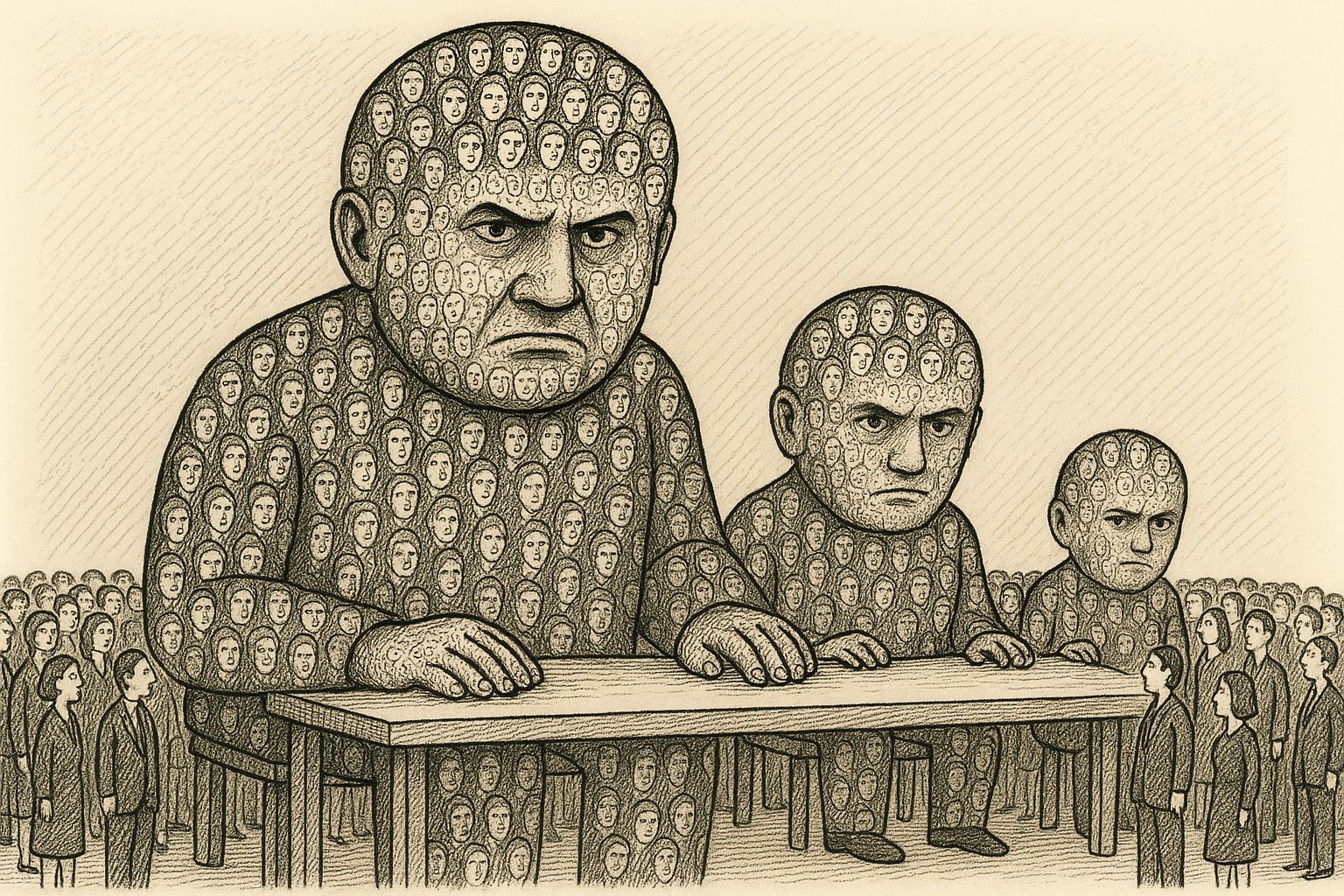
Populism. Name recognition is one of the most important advantages of a candidate. The influence of celebrity actors, singers, or sports icons uses their fame and emotional connection with the public to overshadow the qualifications or capabilities of more deserving candidates, creating an uneven playing field. They risk undermining substantive political discourse and fostering dependency on unsustainable promises. Political leaders want to create a buzz, bypassing institutional frameworks, and promising short-term benefits like subsidies or free goods to secure votes.
Dynastic Politics. Dynastic politics not only sideline merit-based leadership but also restrict the opportunity for new leaders. This concentration of power enables politicians to leverage their positions for financial gain, with many amassing significant wealth during their tenure. Initially considered as a service, political leadership has become a flourishing career. Lifelong pensions and perks granted to politicians misuse of privilege. The focus shifts from governance to self-enrichment. The most effective way to prevent one family or group from controlling is by imposing term limits on legislators.
The Self-Serving Pillars of Democracy in India
The Constitution of India provides for the separation of the three pillars of governance, as each of them has been entrusted with separate responsibilities. The role for which they have been purposefully created is limited till the point when it interferes or overlaps. The three pillars of the Constitution are the Legislature, the Executive and the Judiciary. The media is considered the fourth pillar. Each intended to uphold governance, justice, law-making, and public accountability. However, these institutions, often hailed as the backbone of democratic integrity, are increasingly criticised for prioritising personal benefits over public welfare, evading accountability, and leaving the electorate marginalised and disillusioned.
Political leaders, forming the legislative pillar, often blur the lines between governance and personal enrichment. Many are interested parties, such as builders or promoters with vested interests in development projects, creating conflicts of interest. They demand MP development funds, intended for constituency improvement, but these are frequently misused to enhance their political image. This is against the principles of separation of powers. The party funds collected under the guise of political activities lack transparency, with allegations of corruption and personal enrichment rampant. After the election, these leaders become unreachable, leaving constituents feeling abandoned. Enhanced privileges and pensions further sweeten their positions, ensuring a comfortable life regardless of performance. By participating in executive functions to steal the limelight or secure benefits, legislators prioritise self-aggrandisement over legislative duty. This self-serving behaviour underscores a legislature more focused on personal gain than public service.
The Executive: The executive branch, tasked with policy implementation and administration, has become a hub of self-serving practices. Pay commissions, periodically recommend salary hikes for bureaucrats and other government employees. The Non-Functional Upgrade (NFU) privilege allows officers to receive higher pay scales without corresponding duties, effectively rewarding them for tenure rather than merit and responsibility. This system ensures financial gain without accountability. Beyond salaries, some corrupt executives are also implicated in systemic corruption through civil contracts. A common practice known as the "money flow back" principle sees these people allegedly pocketing 30-40% cuts from project funds.
They draft policies that rarely scrutinise their conduct, creating a shield against accountability. This not only wastes public resources but also results in substandard infrastructure, as funds meant for development are siphoned off for personal gain. The executive’s ability to manipulate policies and contracts exemplifies how it prioritises self-interest over public welfare.
The judiciary is meant to deliver justice impartially. However, it is marred by its collegium system, an archaic mechanism where judges appoint other judges. This self-regulatory framework lacks transparency and external oversight, fostering a culture where accountability is minimal. Rarely are verdicts passed against judges or advocates, even in cases of alleged misconduct, suggesting that the judiciary protects its own rather than upholding justice universally. This insulation from scrutiny allows potential abuses of power to go unchecked. The collegium system, while designed to maintain judicial independence, has been criticised for creating an elitist clique that prioritises its turf over public interest. Delayed justice and a massive backlog of cases further compound the issue, as the judiciary’s inefficiencies disproportionately affect citizens while its members remain shielded from repercussions.
Often dubbed the fifth pillar of democracy, the media is tasked with holding other pillars accountable and informing the public. However, it increasingly prioritises sensationalism and financial benefits over truth. Driven by profit motives, media outlets distort facts or focus on drama to boost viewership, neglecting investigative journalism that could expose corruption or inefficiencies in governance. This shift undermines the media’s watchdog role, as critical issues are sidelined for stories that sell. By aligning with influential players or chasing revenue, the media erodes public trust and contributes to a misinformed electorate. Its failure to uphold truth exemplifies how even this pillar serves its interests rather than the citizenry.
Across these pillars, systemic corruption binds their self-serving tendencies. Executives evade accountability through policy manipulation, the judiciary shields itself via the collegium system, legislators exploit development funds, and the media trades truth for profit. The system functions effectively only when driven by influence or corruption, leaving ordinary citizens disenfranchised. The electorate bears the burden, feeling left out after casting their votes. Post-election disillusionment is palpable, as leaders become inaccessible, and governance favours the powerful. Public trust erodes as each pillar fortifies its privileges, marginalising those it is meant to serve. The result is a democracy where personal gain trumps collective welfare, and citizens are left grappling with substandard services, delayed justice, and misinformation. This systemic self-interest leaves the electorate marginalised, bearing the cost of a dysfunctional democracy. Addressing these issues demands comprehensive reforms to realign these pillars with their core purpose: serving the public, not themselves. Until then, India’s democracy risks remaining a system where power serves the powerful, and the common citizen’s voice is drowned out by the clamour of self-interest.
Why Indian Democracy Still Functions?
India, the world’s largest democracy, stands as a remarkable testament to the endurance of democratic governance amidst a sea of challenges. From its birth in 1947, following centuries of colonial rule and the trauma of partition, to its present-day struggles with corruption, social inequality, and regional tensions, Indian democracy has faced storms that might have shattered lesser systems. Yet, it persists, vibrant and chaotic, a puzzle to political theorists and a beacon to nations striving for self-governance. How and why does this democracy continue to function?
Indian democracy is an audacious experiment—a nation of over 1.4 billion people, speaking hundreds of languages, practising every major religion, and navigating stark economic disparities, all united under a single democratic framework. Its challenges are legion: corruption erodes trust, inefficiency hampers progress, and social divisions threaten cohesion. Yet, despite these fissures, India has held free and fair elections, maintained civilian rule, and fostered a pluralistic society for over seven decades. This resilience stems not from perfection but from a combination of human endeavour and philosophical depth. The answer lies in a small number of selfless leaders, a disciplined military, honest officers, a culturally rich populace, and an adaptive, intelligent society. These are all underpinned by a timeless philosophy of ‘Sanatana’, which forms the bedrock of this enduring democracy.
In a political arena often tainted by self-interest, India has been fortunate to produce leaders who place public service above personal ambition, inspiring faith in democratic institutions. Lal Bahadur Shastri, with his simplicity and resolve during the 1965 Indo-Pak war, rallied a nation under the slogan “Jai Jawan, Jai Kisan” (Hail the Soldier, Hail the Farmer), emphasising collective welfare over personal glory. More recently, Atal Bihari Vajpayee and Narendra Modi navigated coalition politics with a statesmanship that prioritised national stability over partisan gain. These leaders, though not without flaws, demonstrated a commitment to the greater good, whether through nation-building policies, crisis leadership, or moral integrity. Their examples have bolstered public trust, ensuring that even when corruption scandals erupt, the democratic system retains legitimacy through the memory of such service-driven leadership.
The Indian armed forces stand as silent sentinels of democracy, their honour and sacrifice providing a bulwark against instability. With over a million personnel, the military is one of the world’s largest, yet it has never sought to overthrow civilian rule—a rarity among post-colonial states. This apolitical stance is rooted in a tradition of duty and patriotism, exemplified by soldiers who brave the frozen heights of Siachen Glacier or the arid borders of Rajasthan to secure the nation. Their sacrifices, often made in anonymity, protect not just territory but the democratic freedoms that define India. Unlike nations where military coups have derailed democracy, India’s armed forces uphold the Constitution, ensuring that power remains with elected representatives. This restraint, coupled with their role in disaster relief and national emergencies, reinforces the democratic fabric by demonstrating that honour lies in service, not domination.
Within India’s executive and judiciary, a cadre of honest and hardworking officers serves as the backbone of governance. These individuals, often operating at the upper echelons of Maslow’s hierarchy of needs, are driven by self-actualisation rather than mere survival, and uphold the rule of law against formidable odds. T.N. Seshan, as Chief Election Commissioner in the 1990s, transformed India’s electoral process by curbing malpractices, ensuring that democracy remained a true reflection of the people’s will. Ashok Khemka, U.Sagayam, Armstrong Pame, Awanish Sharan, Vinod Rai, Vinod Rai, Aruna Sundararajan, Kiran Bedi, Durga Shakti Nagpal, etc, are some of the notable officers who are known for their honesty and integrity. Justice H.R. Khanna, during the 1975 Emergency, dissented against the suspension of fundamental rights, sacrificing his chance at becoming Chief Justice to defend constitutional values. These officers, though outnumbered by the corrupt or complacent, prove that integrity can prevail. Their dedication to enforcing laws, delivering justice, or implementing policies keeps democratic institutions functional, offering hope that the system can reform itself from within.
India has the world’s most religions. The Indian diaspora has largely been of Indian origin. India is the birthplace of many religions, which branched out of Sanatana Dharma. Hindus constitute the majority of its population, and this brings a profound strength to its democracy through a philosophy of multiculturalism and self-discipline rooted in Dharma. Far more than a religious concept, Dharma is a framework of ethical living, emphasising duty, righteousness, and harmony with others. This principle has enabled India to manage its staggering diversity: Hindus, Muslims, Sikhs, Christians, Jains, and countless ethnic groups coexist. Ancient texts like the Rig Veda proclaim, “Ekam Sat Vipra Bahudha Vadanti” (Truth is one, sages call it by many names), fostering a tolerance that underpins democratic pluralism. The Hindu diaspora’s adherence to Dharma encourages self-regulation, reducing the need for coercive governance and allowing democracy to thrive amidst diversity. This cultural resilience prevents India from fracturing along communal lines, a fate that has befallen other multi ethnic states.
At the heart of India’s endurance lies its philosophical heritage, a robust framework of ideas that binds the nation together. From the Upanishads’ quest for truth to the doctrine of non-violence, Indian philosophy emphasises tolerance, unity in diversity, and spiritual depth. The concept of “Vasudhaiva Kutumbakam” (the world is one family) reflects a worldview that transcends narrow identities, offering a moral compass to the world. This philosophy fosters resilience, teaching Indians to bend rather than break under pressure. Historically, it has guided national recovery, whether through the non-violent struggle for independence or the rebuilding of institutions post-crisis. It is this soul of India, a blend of pragmatism and idealism, that makes the difference, holding together a nation that might otherwise splinter under its complexity.
India’s people are not just numerous but remarkably intelligent and adaptable, a trait that fuels both economic growth and democratic stability. With a literacy rate approaching 80% and a growing pool of graduates, India has harnessed education to drive innovation, particularly in science and technology. The information technology sector, led by companies like Infosys and Tata Consultancy Services, has made India a global leader, employing millions and integrating the nation into the world economy. Beyond IT, India’s manufacturing sector is gaining momentum, supported by initiatives like “Make in India,” which capitalise on a fertile land and a skilled workforce. This adaptability—seen in the shift from an agrarian economy to a tech-driven one—creates a populace invested in democratic governance. As citizens reap the benefits of progress, they become stakeholders in maintaining the system that enables it, reinforcing democracy’s foundations.
India’s fertility extends beyond its soil to its economic and social dynamism. A nation blessed with arable land and natural resources, it has transitioned from food scarcity in the 1960s to self-sufficiency today, thanks to the Green Revolution and agricultural innovation. This economic vitality, coupled with gains in manufacturing and services, provides the material basis for democratic stability. A population that is educated, employed, and upwardly mobile is less likely to succumb to authoritarian promises. Instead, it demands accountability and participation, sustaining democracy through active engagement. India’s ability to adapt to global economic trends while leveraging its inherent strengths ensures that its democratic experiment is not just ideological but practical.
We can conclude that India is certainly not a Republic but a modified democratic system. For democracy to remain effective in a modern, populous nation like India, it must evolve to address these challenges. Enhancing transparency in election financing, strengthening institutions to combat corruption, and fostering greater civic participation are essential steps. Only by confronting these issues can India’s democracy uphold the spirit of its ancient predecessor while meeting the demands of its unparalleled scale and diversity.